
Modern websites in 2026 need to do more than look good. They need to communicate clearly, provide a seamless user...
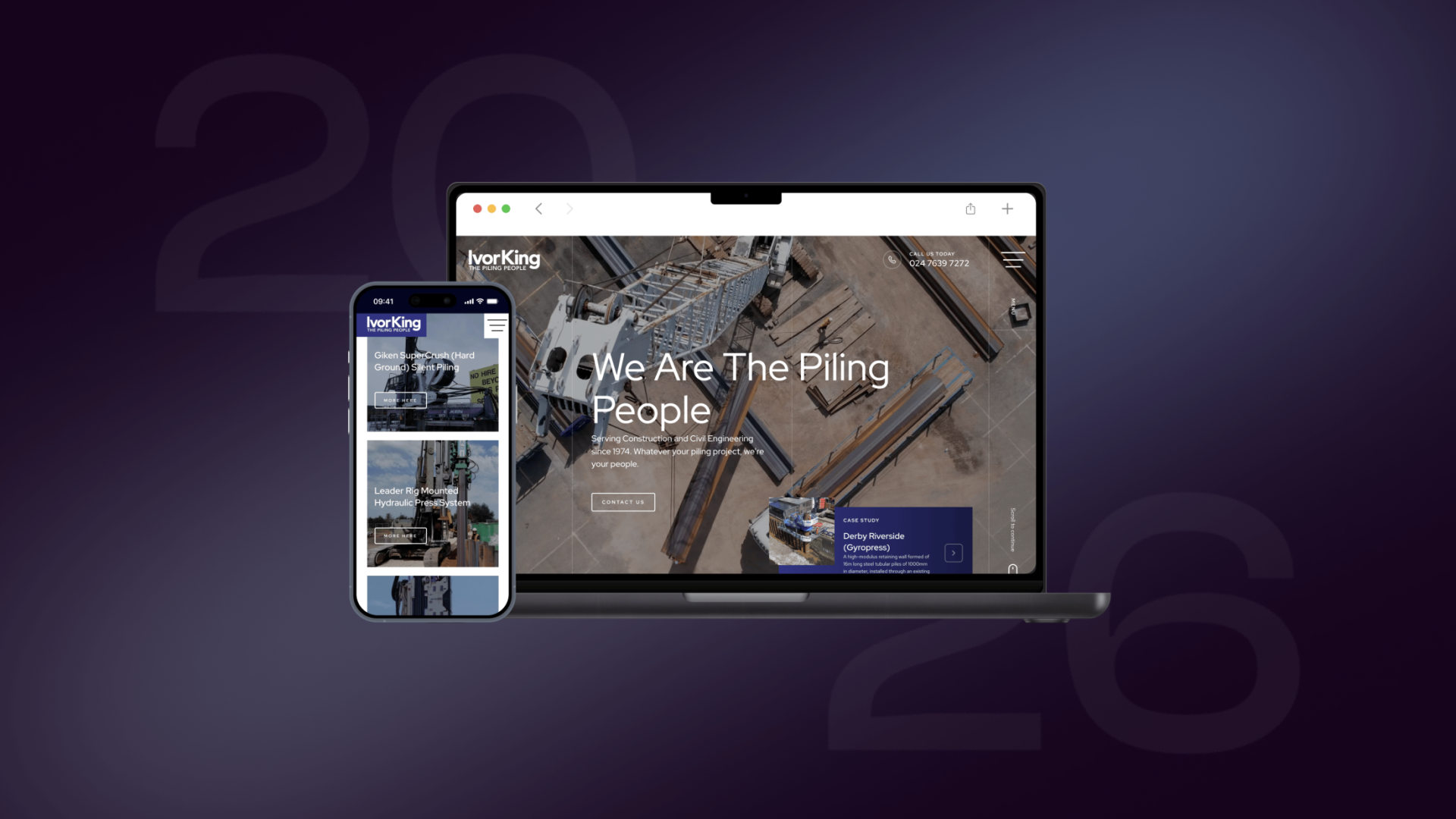
Modern websites in 2026 need to do more than look good. They need to communicate clearly, provide a seamless user experience and deliver measurable results for the businesses behind them.
As we reach the end of 2026, website design is increasingly about balancing creativity, technology and commercial performance. AI is opening up new possibilities, visual identities are becoming more expressive, and user experience remains central to successful digital design.
At Adao, we believe the best websites are built around a clear understanding of the brand, its audience and its objectives. Here are the key characteristics shaping modern websites in 2026, and what they mean for businesses across every industry.
Artificial intelligence is creating new opportunities to make websites more helpful, relevant and responsive to visitors.
AI-powered assistants can help potential customers find information, compare products or services and get answers to common questions without navigating multiple pages. Personalisation may also allow websites to highlight relevant content, recommendations or offers based on a visitor’s expressed interests.
For example, someone researching a new product might want to understand its features, compare different options and find out about delivery or aftercare. A well-designed digital assistant could help them find those answers quickly.
However, AI is not automatically the right solution for every business. An inaccurate chatbot or unnecessary interaction can create frustration rather than improve the experience.
For modern websites in 2027, the priority should be usefulness. Technology should help visitors make informed decisions while making the overall website experience more efficient.
Clean layouts, generous whitespace and clear navigation remain important, but modern website design is not about making every brand look the same.
Typography, colour, imagery and layout should communicate a brand’s individual personality. A creative agency might use bold typography and an experimental visual identity, while a professional services company could favour a more understated and structured approach.
High-quality imagery can help visitors understand what a business offers, how it operates and what makes it different.
Photography, illustrations, graphics and video should all be considered as part of the wider visual identity. Rather than using generic stock imagery, businesses should aim for visuals that feel authentic and reinforce their brand.
Images should also be optimised to avoid slowing down the website.
Templates and reusable components can make websites easier to maintain, but they should support the brand rather than dictate its appearance.
Animation, interactive galleries and subtle transitions can make a website feel more engaging. They can also help visitors explore and understand how an interface works.
The danger comes when visual effects take priority over usability. Excessive animation, autoplaying video and long transitions can distract visitors, affect performance and make essential information harder to access.
Websites should also respect reduced-motion preferences and ensure that important information remains accessible without animation.
Every interaction should have a purpose, whether that is helping visitors understand a product, explore a service, navigate content or move closer to making an enquiry or purchase.
Responsive design has been standard practice for years. The challenge now is ensuring that the complete website experience works well on mobile, from initial discovery to completing an important action.
Visitors should be able to find information, explore products or services and complete forms without struggling with small controls, confusing navigation or unnecessary steps.
A well-designed website should make it straightforward to:
Third-party platforms and integrations deserve particular attention. A polished mobile website can still create a poor experience if its payment system, booking platform or enquiry process is slow or difficult to use.
Accessibility is equally important. Readable text, keyboard navigation, descriptive links and clear form errors help make websites usable by more people. Colour contrast is also key, and designers are increasingly considering Accessible Perceptual Contrast Algorithm (APCA) alongside established accessibility guidance.
The Web Content Accessibility Guidelines (WCAG) remain an established framework for improving accessibility, while APCA offers an alternative approach to evaluating contrast as accessibility practices evolve.
Beautiful imagery and immersive visuals can strengthen a website, but they should not come at the expense of speed and responsiveness.
Large images, background videos, third-party widgets and unnecessary scripts can all affect performance. These elements should be considered during design and development rather than addressed only after launch.
Google’s Core Web Vitals provide useful benchmarks for assessing real-world user experience:
These are Google’s recommended thresholds, assessed using real-user data at the 75th percentile. They are useful performance targets, not guarantees of search rankings or business success.
Practical improvements include optimising images, loading content efficiently, reducing unnecessary scripts and testing how the website performs on mobile connections.
As people increasingly use AI-assisted search to research businesses, compare products and find services, websites need to remain useful, accessible and easy for search engines to understand.
This does not mean abandoning traditional SEO. Technical accessibility, clear site structure, descriptive page titles and helpful content remain important foundations.
Potential customers want to understand what a business offers, how its products or services work, what makes it different and whether it can meet their needs.
Useful service pages, detailed product information, helpful guides and informative articles can answer these questions while helping visitors make informed decisions.
Original content is particularly valuable. Rather than publishing repetitive articles to target every possible keyword, businesses should share genuine knowledge, expertise and insight relevant to their industry.
Google’s guidance on AI features and your website explains how established SEO principles remain relevant to its AI search experiences. There is no guaranteed shortcut to appearing in AI-generated answers.
A website has an important commercial role: turning interest into action.
Visual design can attract attention, but visitors also need clear information and a straightforward route towards taking the next step. Each page should have a purpose, whether that is showcasing a product, explaining a service, generating an enquiry or encouraging a purchase.
Visitors should be able to understand what a business offers, the value it provides and what they need to do next without unnecessary effort.
Unclear pricing, complicated forms, vague descriptions and inconsistent branding between the website and third-party platforms can all introduce doubt.
Clear calls to action, concise forms and transparent information can help visitors move forward with confidence.
Rather than judging a website purely on appearance, businesses should monitor how effectively it supports their objectives.
Useful metrics include:
If visitors regularly view service pages but rarely submit enquiries, investigate whether unclear information, weak calls to action or a complicated contact process could be responsible.
Visitors need to feel confident in a business before they commit to making a purchase, submitting an enquiry or sharing their information.
Accurate imagery, genuine testimonials, transparent pricing and easy-to-find practical information all contribute to trust. Consistency across the website and any connected platforms is equally important.
Personalisation can also improve the experience when used thoughtfully. Relevant recommendations, clearly organised offers and content tailored to visitors’ expressed interests may help people find suitable options more easily.
However, advanced personalisation is not essential for every business. Better navigation and clearer content may deliver greater value with less complexity.
Where personalisation involves visitor data, businesses should be transparent about how information is used and obtain appropriate consent where required.
With so many website trends competing for attention, the best starting point is to establish a strong foundation.
Businesses should assess whether their website:
Once these fundamentals are in place, emerging technologies such as AI assistants and personalised experiences can be evaluated according to their potential value.
A website should not be treated as a one-off project. Regular reviews of content, performance, integrations and visitor behaviour help keep the experience relevant as the business and its audience evolve.
Modern websites in 2026 do not share one defining visual style. They can be bold or understated, immersive or minimalist, highly interactive or deliberately simple.
What they share is a clear purpose: communicating a brand, helping visitors find information, performing reliably and making important actions straightforward.
The most successful websites bring together thoughtful design, intuitive user experience and reliable technology to create a digital presence that works for both the audience and the business.
At ADAO, we bring together website design, development, user experience and digital marketing to help businesses build websites that look exceptional and work hard for their objectives.
More Articles





In order to have the best experience, please update your browser. If you choose not to update, this website may not function as expected. Clicking the button below will help you to update your browser.
Update Your Browser Continue Without Updating